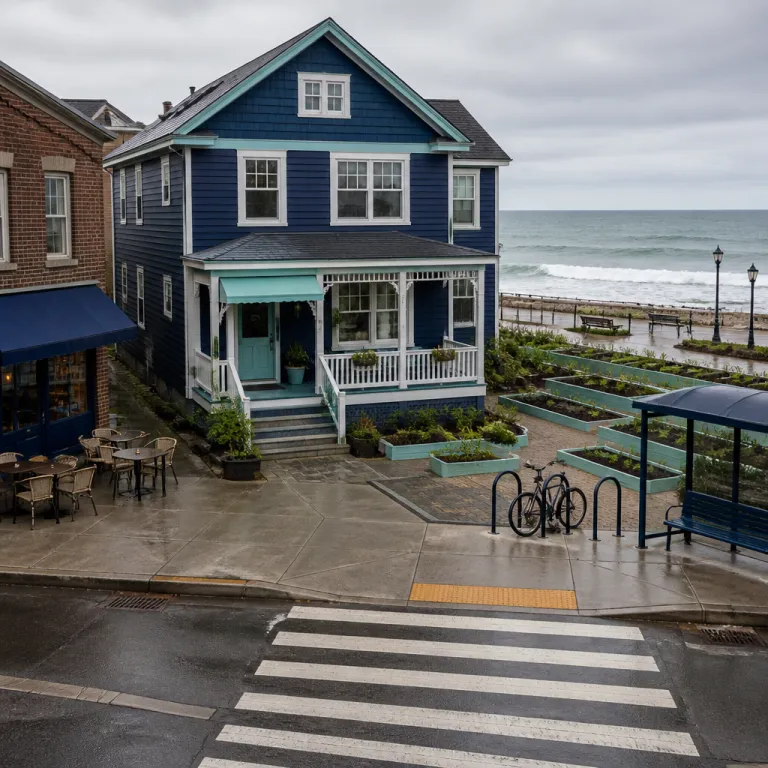
Why neighborhood beats amenities for a luxury guesthouse stay
Most luxury travelers now start with the map, not the mattress. When you choose a guesthouse by its neighborhood first, you are choosing how your days will feel from the moment you step outside. That shift is the essence of staying in a guesthouse that is rooted in its surroundings, where the street, the café and the corner store matter more than the thread count.
Survey data from Booking.com’s 2023 Travel Predictions report and Expedia Group’s 2023 Traveler Value Index show that a clear majority of travelers prioritize location over price, and that instinct is even stronger in the premium segment. The neighborhood shapes safety, convenience and atmosphere every hour of your stay, which is why “Why is neighborhood important when choosing accommodation? The neighborhood affects safety, convenience, and overall experience.” remains one of the most frequently asked lines in expert guidance. For guesthouse travelers, this is where destination immersion stops being a cruise brochure phrase and becomes a daily practice of walking, tasting and learning your temporary block.
Think of a guesthouse on a quiet residential lane in Venice versus one facing a cruise port access road. The first offers immersion in local life, from the bakery queue to the evening passeggiata, while the second delivers a transient, port focused rhythm that feels closer to Azamara Cruises disembarkation than to home. When you treat neighborhood and surroundings as your main filter, you start comparing streets and squares the way others compare spa menus and pool decks.
The guesthouse advantage over hotels in real destination immersion
Luxury guesthouses sit where people actually live, not where tour buses idle. That simple fact gives them a structural advantage for travelers seeking authentic neighborhood immersion, especially for solo guests who want to feel part of a place rather than parked beside it. You are not just booking a room; you are choosing which front door you will open onto the city’s daily script.
In Los Angeles, for example, a small guesthouse in the Hollywood Hills places you on winding residential streets where neighbors walk dogs at dusk and local cafés double as offices for screenwriters. A large hotel on Hollywood Boulevard, by contrast, keeps you in a corridor of souvenir shops and character costumes, closer in spirit to a cruise terminal than to a lived in neighborhood. The same pattern repeats in Venice, where a guesthouse on a back canal near a school and a greengrocer offers deeper immersion than a property facing the main port used by an Azamara cruise ship or any other cruise line.
Guesthouses also tend to be run by owners who sleep under the same roof, which changes the quality of local advice. They know which beach is quiet at sunrise, which bar stays civil after midnight and which streets feel safe to cross after a late dinner, and they answer your frequently asked and quietly asked questions with the precision of someone who walks that route daily. For a deeper sense of how a longer stay reshapes your habits compared with a weekend in a residential area, consider how a week in one neighborhood lets you recognize faces, remember opening hours and feel the rhythm of the street.
How neighborhood quality compounds over multi night and extended stays
The longer you stay, the more the neighborhood either rewards or punishes your choice. A one night stop can tolerate a noisy bar downstairs, but nights longer than three quickly expose every weakness in the surroundings. Over extended stays, the walk to the market, the route to the metro and the evening soundscape become as important as the bed itself.
Luxury guesthouses in walkable districts allow guests to build small rituals that feel like ownership of the city. You might learn which bakery opens first, which beach tram is least crowded or which alley offers a shortcut home after a late exhibition, and those micro discoveries turn a stay into an experience. This is where the logic of destination immersion used by Azamara and other travel brands translates to land, except that instead of a few curated shore excursions you are curating your own daily circuits from your front door.
Booking several months in advance gives you access to the best located rooms in these high demand neighborhoods. Travelers who plan early can secure guesthouses on quiet side streets that still sit within a ten minute walk of key attractions, which is the ideal balance between calm and convenience. Over time, that proximity saves you money on transport, reduces fatigue and increases the number of spontaneous experiences you can fold into each day.
Reading the street: what to look for around a guesthouse
Before you fall for a beautifully styled room, scroll down to the map. The fastest way to judge how well a guesthouse connects you to its neighborhood is to read the street like a local, looking for daily life markers rather than tourist infrastructure. A bakery, a pharmacy, a small supermarket and a laundromat within a few hundred meters are strong signs that you are in a lived in area.
By contrast, a cluster of souvenir shops, tour bus stops and chain restaurants suggests a neighborhood built around transient visitors. That can be convenient for a quick cruise style stop, but it rarely delivers the kind of immersion that makes extended stays feel elevated and quietly luxurious. When you see only big brand hotels and no residential doorbells, you are closer to a floating city from Azamara Cruises than to a street where guests will feel part of the community.
Use online maps and Street View to walk the block at different zoom levels, paying attention to sidewalks, trees and how people use the space. Travel guides and recent user reviews help you assess safety, while crime statistics from official sources such as municipal open data portals or national police reports add another layer of reassurance for those who like data. “How can I assess a neighborhood's safety? Review crime statistics and recent traveler reviews.” is still one of the most frequently asked safety questions, and it remains a reliable starting point when you are weighing two potential destinations for your next guesthouse stay.
From cruise style destination immersion to street level experiences
Luxury cruise lines such as Azamara built their reputation on destination immersion, promising longer port calls and more time ashore. The idea is simple; guests explore deeper when the ship stays late, and nights longer in port allow for dinners, concerts and unhurried walks. That same principle applies on land, but a well chosen guesthouse neighborhood replaces the ship with a front door on a real street.
Think of a Journey Azamara itinerary that overnights in Venice, giving guests time to wander beyond the cruise port and into quieter sestieri. A guesthouse in one of those residential quarters offers a similar but more continuous experience, where you wake to the sound of schoolchildren and end the day on a bench beside neighbors, not fellow passengers. When you explore Azamara marketing, you see how strongly they lean into immersion experiences; the smartest guesthouse travelers borrow that mindset and apply it to choosing neighborhoods rather than decks.
Some premium booking platforms now highlight guesthouse stays that echo the modern luxury positioning of brands like Azamara Cruise, but with a street level focus. They showcase properties where guests will find hidden gems within a ten minute walk, from family run trattorias to small galleries, and where the host’s recommendations replace shore excursion desks. For a historical perspective on how large scale hospitality once tried to anchor itself in neighborhoods, the story of the Wardman Park property in Washington DC offers a useful counterpoint to today’s more intimate guesthouse model.
Practical steps to evaluate a guesthouse neighborhood before you book
Start with a simple rule; never book a guesthouse without doing a five minute virtual walk around the block. Use Street View to trace your route from the front door to the nearest café, metro stop and park, and ask yourself whether this feels like your ideal version of immersion in local life. If the streets look empty, car dominated or lined only with tourist shops, keep searching.
Next, read recent reviews with a focus on neighborhood comments rather than only on the room. Guests often mention noise levels, perceived safety and the quality of nearby dining, and these details matter more over extended stays than an extra pillow menu ever will. When you contact the host, ask about their own daily routine; where they buy bread, which beach they visit, how late they feel comfortable walking home, and you will quickly learn whether the area matches your travel style.
Finally, treat the booking process itself as part of the experience. A serious luxury guesthouse will have a clear privacy policy, transparent answers to frequently asked questions and a willingness to hold a specific room that suits your needs if you book several months in advance. When a host responds quickly, offers precise neighborhood tips and seems genuinely proud of their street, you can be confident that guests will arrive not at an anonymous lodging but at a private address woven into the city’s daily life.
Key figures on location, safety and neighborhood choice
- About 60% of travelers now prioritize location over price when choosing accommodation, according to recent global surveys by Booking.com (Travel Predictions 2023, fieldwork July–August 2022) and Expedia Group (Traveler Value Index 2023, fieldwork September–October 2022), which underlines how central neighborhood has become to perceived value.
- Industry data from organizations such as Skift (Skift Research: Megatrends 2023) and the World Travel & Tourism Council (WTTC Economic Impact Research 2023) shows a marked increase in demand for accommodations in vibrant, mixed use neighborhoods, reflecting a broader preference for local experiences over isolated resort style stays.
- Travel safety research from national tourism boards and insurance providers consistently finds that guests who research neighborhood crime statistics and read recent traveler reviews report higher satisfaction and fewer negative incidents during their trips.
- Booking patterns reported by major online travel agencies indicate that travelers who reserve several months in advance are more likely to secure rooms in high demand residential districts, which directly improves the quality of their neighborhood experience.
Frequently asked questions about choosing a guesthouse by neighborhood
Why is neighborhood more important than room size for many travelers ?
The neighborhood dictates safety, convenience and atmosphere from morning to night, while room size matters mainly when you are indoors. A well located guesthouse lets you walk to cafés, markets and cultural sites, which adds more value to your stay than a few extra square meters. For luxury travelers, the right street often feels like an amenity in itself.
How can I assess a neighborhood's safety before booking a guesthouse ?
Combine official crime statistics with recent traveler reviews that mention how the area feels at night. Online maps help you understand lighting, foot traffic and the presence of active street life, all of which contribute to perceived safety. “How can I assess a neighborhood's safety? Review crime statistics and recent traveler reviews.” remains a reliable guideline when you are comparing different districts.
What tools should I use to evaluate a guesthouse location ?
Online maps and Street View are essential for visualizing the block and checking walkability. Travel guides and local tourism board resources help you understand which neighborhoods are known for culture, dining or nightlife. User reviews then add real world context about noise, safety and the quality of nearby services.
How far in advance should I book to get the best neighborhoods ?
In popular cities, booking several months in advance is often necessary to secure guesthouses in the most desirable residential areas. Early planners have more choice of streets, views and room categories, especially in small properties with only a few elevated rooms. Last minute bookings tend to push you toward either tourist heavy strips or less connected outskirts.
What daily life markers signal a good neighborhood for destination immersion ?
Look for a mix of bakeries, small supermarkets, pharmacies, schools and parks within easy walking distance of the guesthouse. These services indicate that locals rely on the area for everyday life, which usually means better food, more authentic experiences and a calmer evening atmosphere. Tourist only zones, by contrast, often empty out or become noisy once the day trippers leave.